Transcranial Magnetic Stimulation
Indicated for the Treatment of Medication Resistant Depression
Transcranial magnetic stimulation (TMS) is a non-invasive treatment that uses magnetic pulses to stimulate specific areas of the brain to improve symptoms of depression.
Non- Invasive
Personalized treatment plans
Physician-guided care
Understanding TMS
What is TMS?
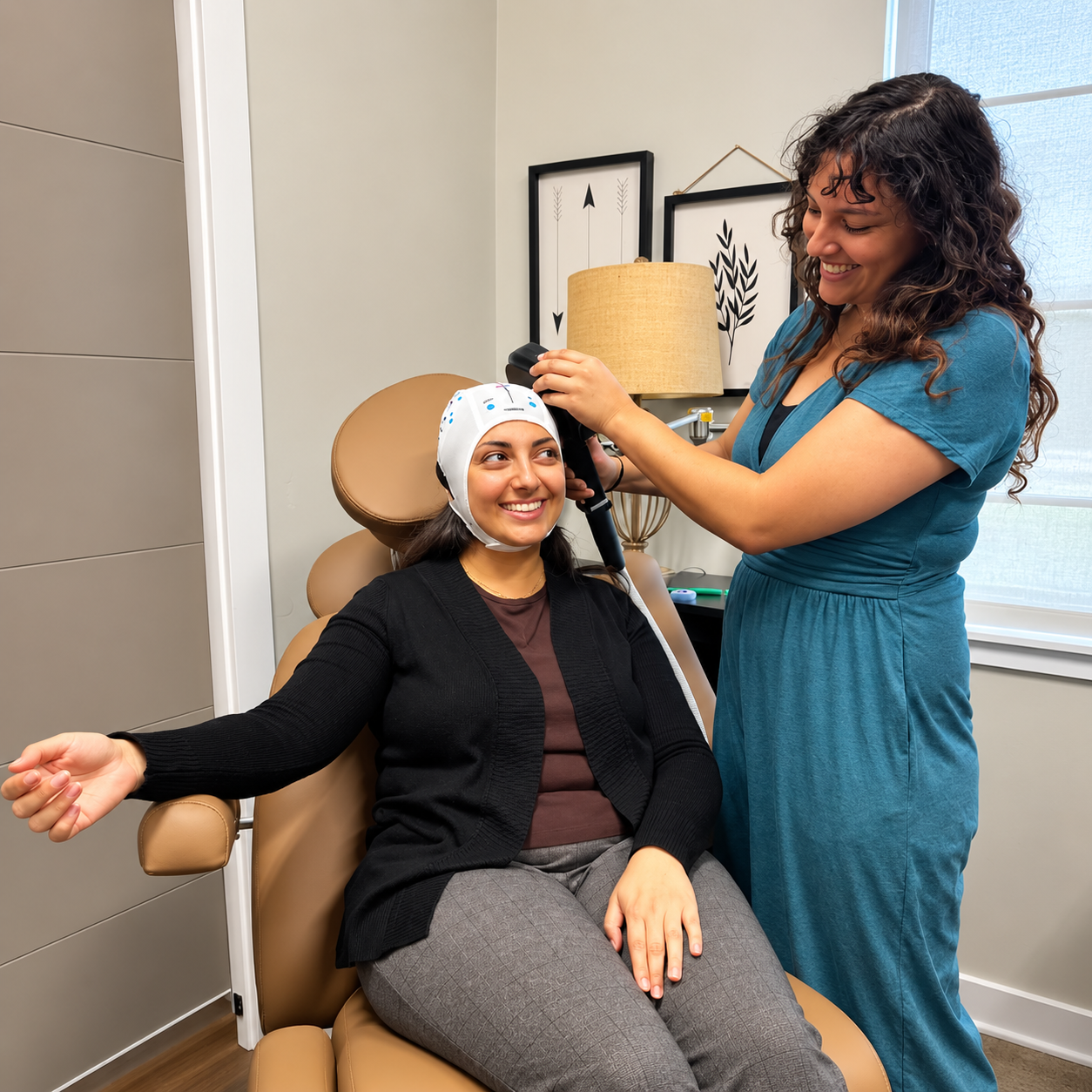
TMS uses a magnet placed against the scalp to deliver focused magnetic pulses to a very specific area of the brain. It does not require surgery or anesthesia. The magnetic pulses stimulate neurons, causing them to fire and activate certain pathways involved in mental health disorders. This activation, over time, can restore balance to the brain. Multiple studies have shown up to 30% of patients achieve complete remission of depression, and up to 80% of patients experience significant improvement in depression symptoms.
Every patient receives an intake evaluation to ensure that TMS is an appropriate treatment. We accept referrals from physicians, nurse practitioners, physician assistants, and therapists. We can provide evaluations for patients who self-refer. If you are a patient interested in TMS, please email TMS@GainesvilleDPCMD.com for more information, or have your clinician fax a referral to (352)559-2441.
Your experience
What to expect
Every treatment plan begins with a conversation. Here is a general view of how the process may unfold.
01
Consultation
One of our clinicians will meet with you by phone or in person to ensure that TMS is the right treatment for you.
02
Personalized plan
If TMS is considered appropriate, your clinician will explain a plan designed around your needs.
03
Treatment sessions
30-35 daily sessions are included in the treatment. Sessions are completed daily, Monday-Friday. Treatment duration lasts 6-7 weeks.
04
Progress check-ins
Regular check-ins help your clinician understand your experience and discuss next steps.
A personal conversation
Is TMS right for you?
Contact us to discuss your diagnosis, symptoms, medical history, medications, and goals. This conversation is the best place to explore whether TMS may be suitable for you.
Helpful answers
Frequently asked questions
These answers offer general information only. A qualified healthcare professional can provide guidance based on your individual situation.
What Is Transcranial Magnetic Stimulation?
TMS uses an electromagnetic coil positioned against the scalp to deliver magnetic pulses to targeted areas of the brain.
Unlike electroconvulsive therapy, TMS does not require general anesthesia and does not intentionally induce a seizure. Treatment is typically performed in an outpatient setting, and patients remain awake and alert throughout the session.
TMS treatment plans involve a series of sessions rather than a single treatment. The exact treatment schedule depends on the patient's condition, medical history, treatment protocol and the recommendation of the treating medical professional.
What Is TMS Used to Treat?
TMS has FDA-cleared uses for certain conditions and patient populations. One of its most established uses is the treatment of major depressive disorder in appropriate patients. Other FDA-approved indications are Tobacco cessation, Anxiety, Obsessive-Compulsive Disorder, and Migraines.
Depending on the device and treatment protocol, TMS may also have FDA clearance for other specific conditions.
Not every patient with depression or another mental health condition is automatically a candidate for TMS. Our professionals will review your symptoms, diagnosis, previous treatments, medications and medical history before recommending treatment.
Is TMS painful?
Patients describe the pulses as a tapping sensation that is not uncomfortable. The tapping may be experienced as being a loud noise. We provide ear plugs to help if this is needed, as well as a tailored treatment protocol to ensure that the patient is comfortable during the sessions.
How long does a visit take?
Your initial evaluation may take 30 minutes to an hour. Treatment sessions will include a longer initial session that includes ensuring the correct area of the brain is identified. Subsequent treatment sessions last 18 minutes of treatment with TMS, with a total of 30 minutes scheduled that includes ensuring patient comfort, the TMS treatment, and then time afterward to evaluate for any side effects. A treatment course includes 5 daily visits per week, for a total of 30 to 35 visits.
Are there side effects?
Like many medical treatments, TMS may involve possible side effects. During the treatment, this may include a tingling sensation of the skin at the area the magnet is applied. Discomfort from the loudness of the pulses is possible, and ear plugs are provided if this occurs. Some patients may experience muscle twitches during the treatments. The initial treatments may cause a headache. Most patients find that all of these improve or resolve as the treatments progress. We may decrease the strength of the pulses in order to aid patient comfort.
What does TMS cost?
Our practice began offering this treatment for depression because the cost in our area was out of reach for patients who don't have insurance, don't have adequate insurance coverage, or who wish to not involve their health insurance as payment. The intake evaluation, mapping, and full treatment course costs $4000, which is less than half of any TMS provider in North Florida. To help with this, we offer financing through Care Credit, and accept credit card payment as well. We will provide paperwork that a patient may submit to their insurance to attempt insurance coverage, but we will not bill insurance directly. Patients who self-refer to us or who are referred by a healthcare provider who has not made a definitive diagnosis of treatment resistant depression will require a physician visit for this purpose, for which we charge up to $300.
Start a conversation
Request a consultation
Share a few details and a member of our team can follow up using your preferred contact method.
This form is not for emergencies. If you have urgent concerns or are in immediate danger, contact your local emergency services right away.
Contact Us
Please do not include urgent, highly sensitive, or detailed medical information in this form.